Curious what happens before the car door opens? Learn how professional drivers in Pennsylvania prepare their vehicles, plan routes, follow flights, serve clients, and keep a whole day running on time.
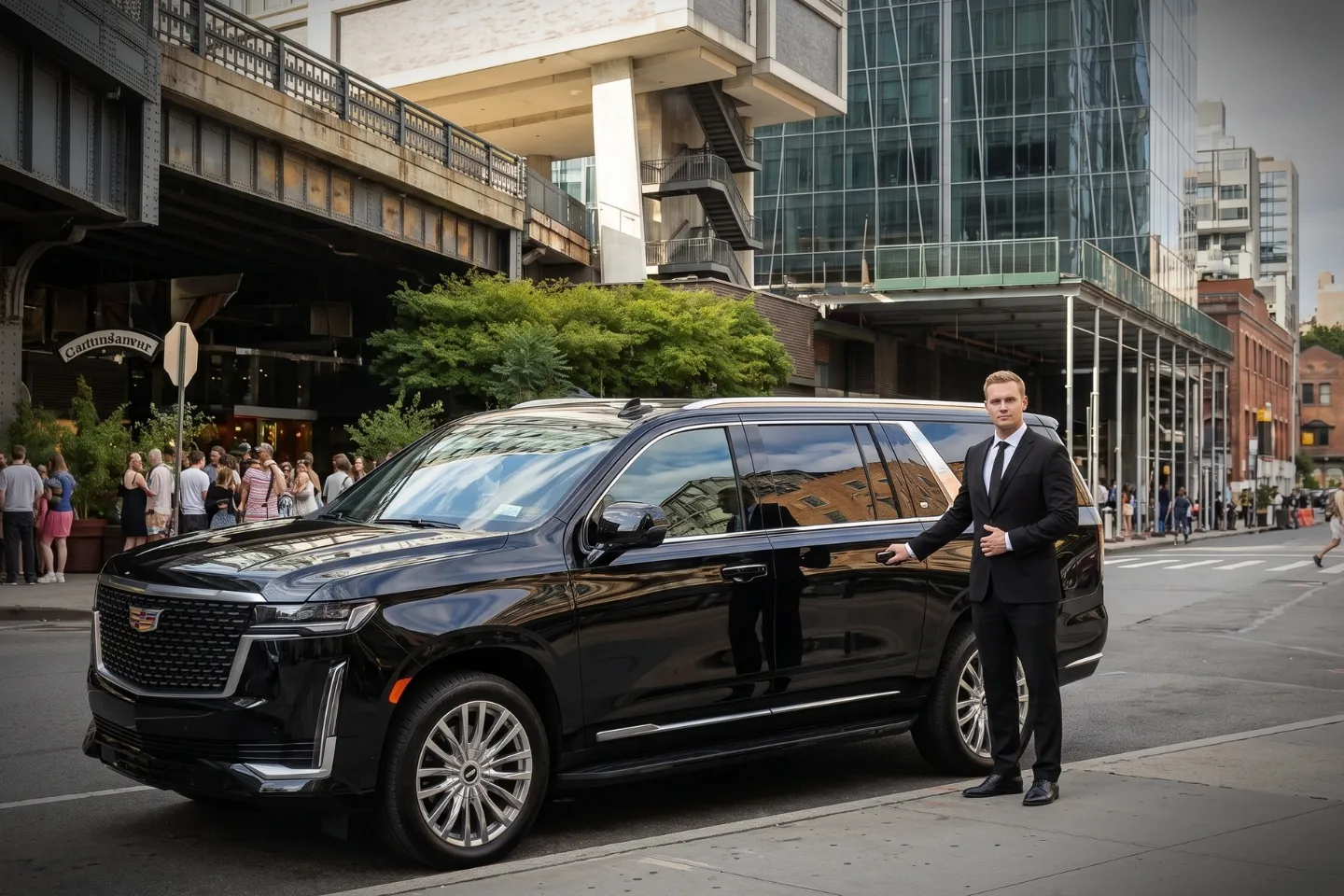
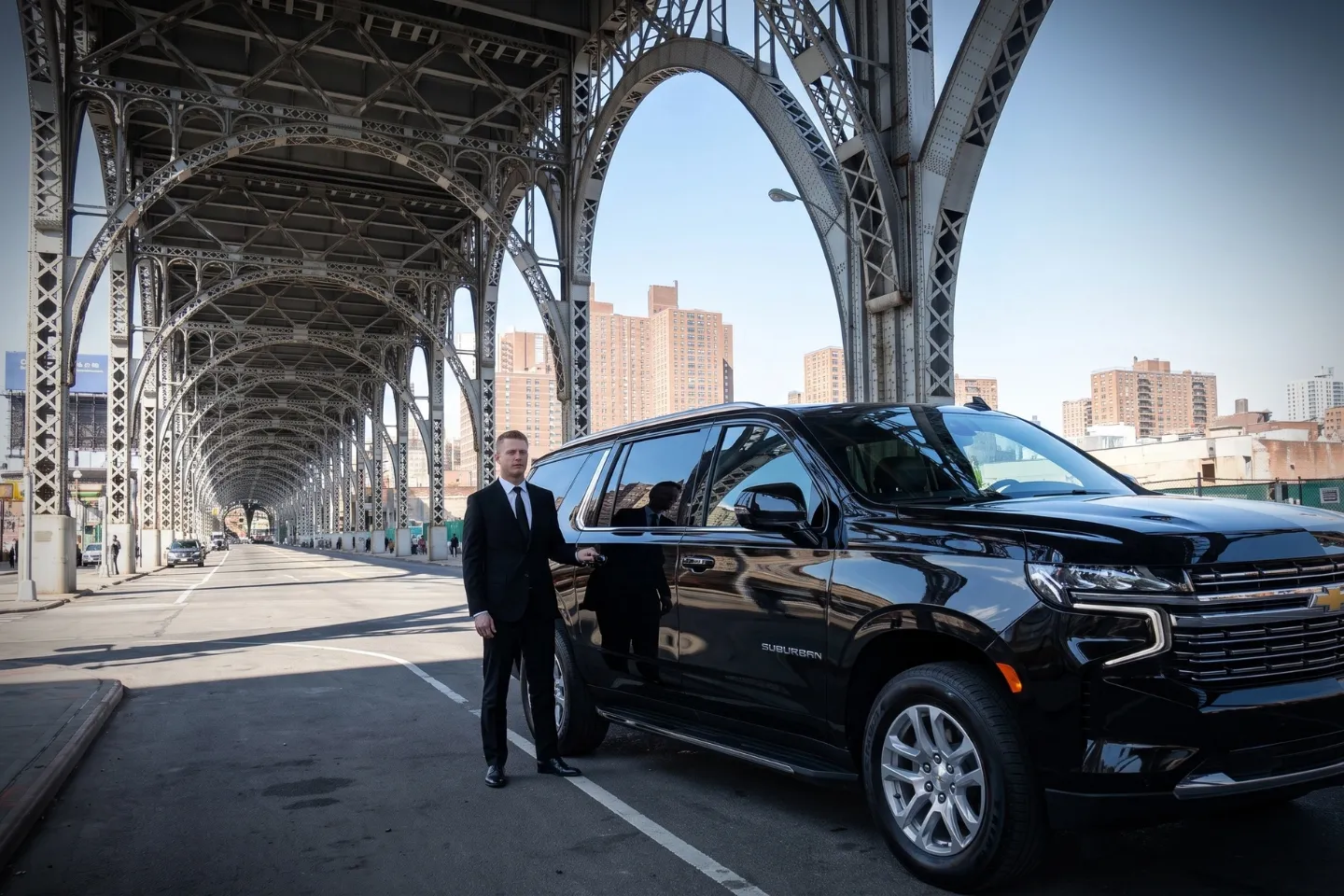
Most people see a chauffeur for a few seconds: a figure in a dark suit holding a door. The work behind that moment starts hours earlier and covers far more ground than driving. A professional with a chauffeur service in Pennsylvania prepares the vehicle, plans the route, tracks flights, drives smoothly and safely, handles luggage, waits for clients, protects their privacy, then solves problems before the passenger notices them. At Legendary Limousine, we have employed chauffeurs since 1997, and this guide describes what the job involves, hour by hour and task by task.
It will help clients know what to expect and help anyone considering the profession understand the work.
What Is the Short Answer?
A chauffeur is a professional driver who transports clients by reservation in a company's luxury vehicle and provides personal service throughout the journey. The role combines four jobs.
- Driver: safe, smooth, punctual transport.
- Host: greeting, door service, luggage handling, and attention to comfort.
- Planner: routes, timing, traffic, flights, and parking.
- Guardian: of the client's safety, schedule, belongings, and privacy.
What Does a Chauffeur Do Before the Trip?
Reviews the Assignment
Each booking arrives with details: the client's name, the pickup and drop-off addresses, the time, the number of passengers, the flight number, and any notes about preferences. The chauffeur studies them, checks the route, and identifies the exact entrance, gate, or terminal.
Inspects the Vehicle
A daily inspection covers tires, lights, wipers, fluid levels, brakes, and warning indicators. Any fault is reported to the company before the car leaves the garage.
Cleans and Prepares the Cabin
The exterior is washed, the glass is cleared of streaks, the carpets are vacuumed, and the leather is wiped. Bottled water is stocked, chargers are checked, and the temperature is set before the client steps in.
Checks Traffic, Weather, and Flights
Before leaving, the chauffeur looks at conditions on the planned route and at one or two alternatives. For airport work, the flight's status is checked, and dispatch monitors it afterward.
Arrives Early
The professional standard is to be in position ten to fifteen minutes before the pickup time, parked legally and facing the right direction.
What Does a Chauffeur Do During the Trip?
Greets the Client
A greeting by name, an introduction, and a quick confirmation of the destination set the tone. At an airport, the chauffeur may be waiting in the terminal with a name sign.
Handles Doors and Luggage
The chauffeur opens and closes the passenger door, loads the bags carefully, and makes sure nothing is left behind at either end.
Drives Smoothly and Safely
Passengers should be able to read, type, or sleep. That calls for gentle acceleration, early braking, steady lane discipline, and a calm response to other road users. Speed limits and traffic laws are observed without exception.
Manages the Route
Traffic changes minute by minute. A chauffeur in Philadelphia chooses between Interstate 95 and Interstate 76 according to conditions, and one in Pittsburgh decides whether a tunnel or a bridge will be quicker. The client is told about any significant delay and the plan for dealing with it.
Looks After Comfort
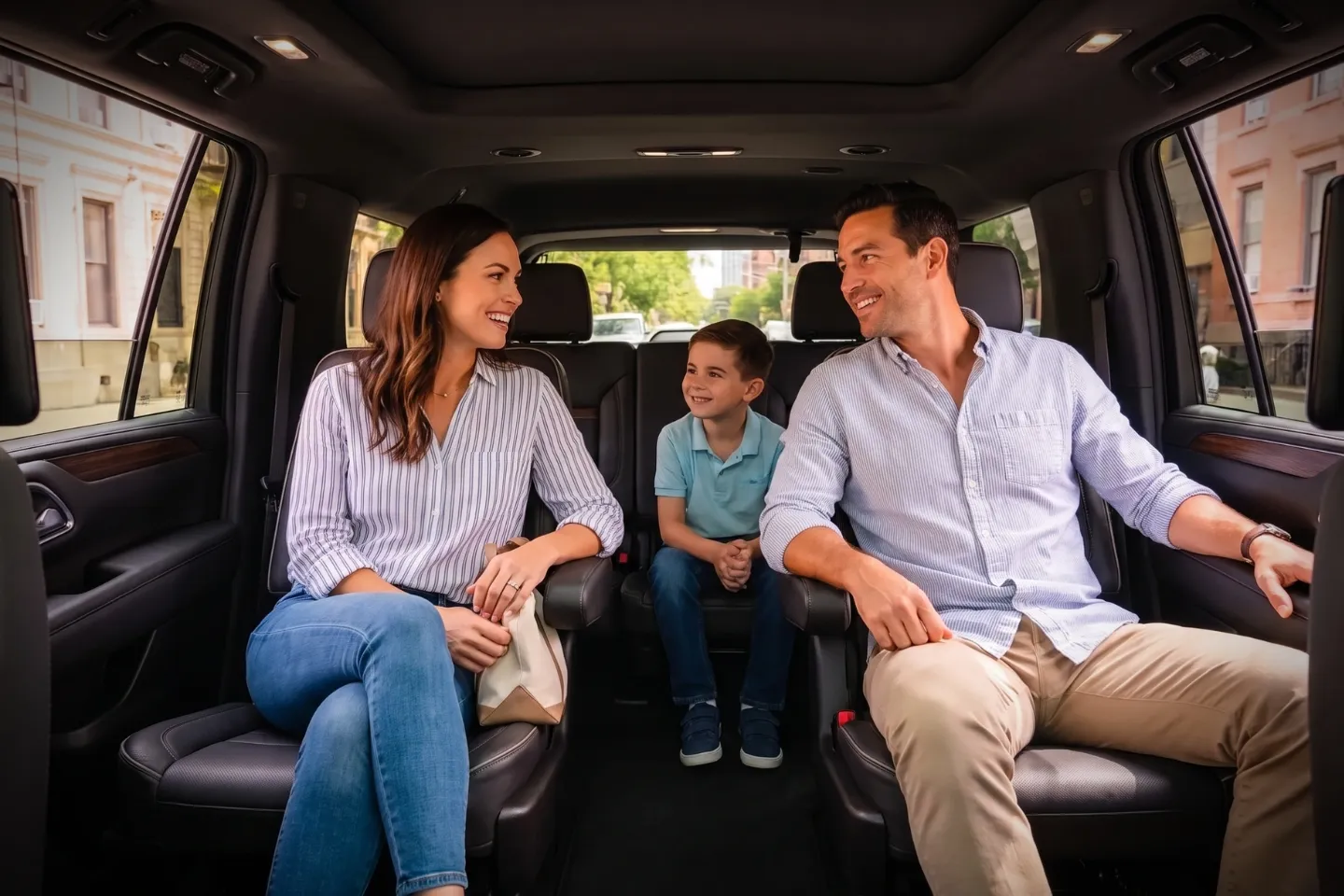
Temperature, music, lighting, and conversation follow the client's wishes. Some passengers enjoy a chat about the city. Others want silence to prepare for a meeting. Reading the difference is part of the skill.
Waits and Stays Available
On an hourly booking, the chauffeur waits near each stop and returns to the door when called. The time is used to tidy the cabin, check the next leg, and update dispatch.
Keeps Confidences
Whatever is said or seen in the car remains private. For executives, public figures, and families alike, this discretion is a core part of the service.
What Does a Chauffeur Do After the Trip?
- Escorts the client to the door where appropriate and confirms that all belongings have been taken.
- Checks the cabin for forgotten items and reports any to dispatch at once.
- Records the times, the mileage, tolls, and parking for accurate billing.
- Removes rubbish, restocks water, and prepares the car for the next client.
- Refuels and reports any mechanical concern.
- Reviews the next assignment.
How Does the Work Change by Type of Booking?
Airport Transfers
The chauffeur tracks the flight with dispatch, positions the car at the terminal, meets the passenger at the curb or inside with a sign, and allows for baggage claim and customs. On departures, the pickup time is planned backward from the flight, and the passenger is dropped at the door for the correct airline. Our guide to booking a chauffeur from Philadelphia International Airport shows the process in detail.
Corporate Days
The chauffeur follows a schedule of meetings, waits at each address, and keeps the day on time. Phone calls in the back seat are treated as confidential. Regular clients often request the same chauffeur, who learns their preferences.
Weddings
The role expands. The chauffeur studies the timeline, coordinates with the planner and photographer, helps with gowns and trains, keeps the vehicle spotless for photographs, and stays calm when the schedule slips.
Proms
The chauffeur is the responsible adult for the evening, follows the itinerary agreed with a parent, and enforces the company's alcohol free policy for passengers under 21.
Tours and Day Hires
For visitors, the chauffeur becomes an informal host, suggesting the order of stops, pointing out landmarks, and knowing where to park at Gettysburg, Longwood Gardens, or a Lancaster farm market. Our guide to hiring someone to drive you for a day describes these bookings.
Group Travel
Drivers of Sprinter vans, mini buses, and coaches manage boarding, head counts, luggage bays, and passenger safety briefings in addition to the driving.
Medical and Family Trips
The chauffeur offers a steady arm, stows a walker, drives gently, and waits through appointments with patience.
Which Skills Does the Job Demand?
- Driving skill: precise, defensive, and smooth in every condition.
- Local knowledge: roads, shortcuts, venues, hotels, and airports.
- Time management: early arrival and realistic planning.
- Communication: clear, polite, and brief.
- Problem solving: a closed road, a late flight, or a change of plan handled without fuss.
- Discretion: absolute confidentiality.
- Presentation: immaculate dress and a spotless vehicle.
- Patience: with traffic, delays, and people.
- Technical ability: navigation, dispatch apps, and vehicle systems.
What Rules Govern a Chauffeur's Work in Pennsylvania?
Chauffeurs work for companies that hold operating authority. The Pennsylvania Public Utility Commission regulates limousine carriers in the state, as its page on limos, taxis, and movers explains, and the Philadelphia Parking Authority oversees limousine service within the city. A regular license covers sedans, SUVs, and standard vans. Vehicles designed for 16 or above including the driver require a commercial license with a passenger endorsement, which PennDOT's commercial driver's license FAQ describes. Our guide to the qualifications a chauffeur needs covers the requirements in full.
What Does a Chauffeur Not Do?
- Break traffic laws: a client's hurry does not change the speed limit.
- Carry extra passengers: the number on board never exceeds the seats.
- Allow unsafe behavior: the chauffeur may end a trip if conduct endangers anyone.
- Serve alcohol to anyone under 21: or permit it in the vehicle on youth bookings.
- Share client information: with anyone outside the company.
- Leave the vehicle unattended with belongings inside: without the client's knowledge.
- Act as security or medical staff: though a chauffeur will call for help immediately in an emergency.
How Is a Chauffeur Paid?
Most chauffeurs earn an hourly wage or a share of the fare, plus gratuities. A tip of 15 to 20 percent is customary and is often added to the invoice. Tips count as income, as the Internal Revenue Service explains on its page about tip recordkeeping and reporting. Clients pay the company, at 2026 rates of about $85 to $120 per hour for a sedan and $110 to $160 for an SUV, and the company pays the chauffeur.
What Does a Full Working Day Look Like?
Follow one chauffeur through a Thursday in the Philadelphia area.
4:30 a.m. He arrives at the garage, inspects a sedan, and wipes the cabin. The first job is an airport run from Villanova. He checks the flight, which is on time, and sees that Interstate 476 is clear.
5:15 a.m. He is outside the client's house, ten minutes early. He loads one suitcase, confirms the airline, and drives to the terminal in thirty minutes. The client works on a laptop the whole way.
7:00 a.m. Dispatch assigns an arrival: a visitor landing from Frankfurt at 7:40. He parks, walks to the international arrivals hall with a name sign, and waits. The passenger clears customs at 8:25. He takes her to a hotel near Logan Square and points out City Hall as they pass.
10:00 a.m. A four hour corporate booking begins in Conshohocken. Two executives visit a client in Wilmington, Delaware, an interstate trip that the company's federal authority covers. He waits in the visitor car park, cleans the windscreen, and reviews the afternoon.
2:30 p.m. A break for lunch and fuel. He restocks water and checks the cabin.
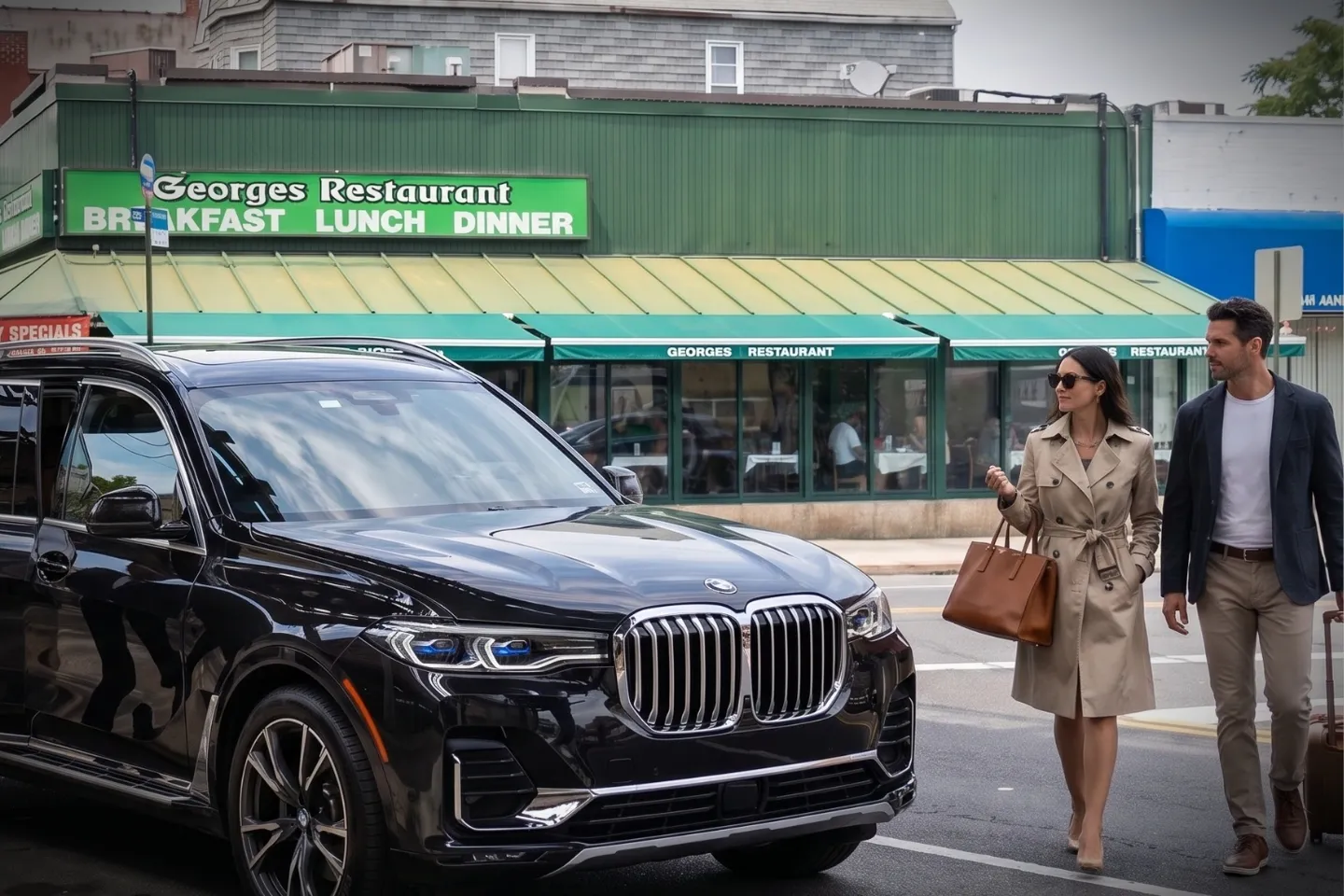
4:00 p.m. The last job is a couple celebrating an anniversary: a pickup in Chestnut Hill, dinner in Center City, and a return at 9:00. He opens the door at the restaurant, waits nearby, and has the car at the curb when they come out.
9:30 p.m. Back at the garage, he records the day's times, reports a tire pressure warning, and goes home. Four clients, three counties, two states, and no late arrivals.
Where Does the Word Chauffeur Come From?
The term is French and originally described a stoker, the person who kept a steam engine's fire hot. Early motor cars needed similar attention before they would run, and the name passed to the people who operated them for wealthy owners. Those first chauffeurs were mechanics as much as drivers. The mechanical duties have faded with modern vehicles, and the tradition of personal service to the passenger has remained at the center of the job.
What Makes a Chauffeured Ride Feel Different?
Passengers often say that a good chauffeur's driving is hard to describe and easy to feel. The car pulls away without a jolt. Braking begins early, so that a stop is a gradual settling instead of a lurch. Corners are taken at a speed that keeps a coffee cup level. Gaps to the vehicle ahead are generous, which removes sudden reactions. Lane changes are planned well before an exit. The chauffeur watches far down the road and in the mirrors, anticipating what other drivers will do. None of this is slow. It is efficient, and it leaves passengers rested when they arrive.
How Does a Chauffeur Handle Problems on the Road?
- A closed road or sudden jam: the chauffeur switches to a prepared alternative and tells the client the new arrival time.
- A delayed or diverted flight: dispatch updates the pickup, and the chauffeur repositions.
- A mechanical fault: the chauffeur stops safely, informs dispatch, and a replacement vehicle is sent while the client is kept comfortable.
- A minor collision: passengers' safety comes first, the police and dispatch are called as required, and onward transport is arranged.
- A passenger who feels unwell: the chauffeur pulls over, calls for medical help if needed, and stays with the client.
- A forgotten item: the cabin is checked after every trip, and found property is logged and returned through the office.
- A difficult situation on board: the chauffeur stays courteous, follows company policy, and involves dispatch.
Clients rarely see these skills, since a well run trip gives them no cause to appear.
Why Do Clients Ask for the Same Chauffeur Again?
Familiarity saves effort. A chauffeur who has driven you before knows the side entrance at your office, the route you prefer to the airport, the temperature you like, and whether you take calls on the way. Regular business travelers and families often build a working relationship over years. Companies try to honor such requests, and the continuity is one of the quiet advantages of using a single chauffeur service.
How Does Dispatch Support the Chauffeur?
A chauffeur rarely works alone. Dispatchers assign jobs, track flights, watch traffic and weather, pass on changes from clients, and send a replacement vehicle if one is needed. When a passenger calls the company at midnight to say a flight has been rebooked, dispatch updates the chauffeur within moments. This partnership is one of the main differences between a professional service and an individual with a car.
How Do Pennsylvania's Roads and Weather Shape the Job?
- City congestion: the Schuylkill Expressway in Philadelphia and the Parkway in Pittsburgh demand local knowledge and patience.
- Tunnels and bridges: Pittsburgh's geography funnels traffic through a few crossings.
- The turnpike: long cashless toll stretches link the major cities, with service plazas for breaks.
- Rural roads: farm vehicles and buggies share the road in Lancaster County.
- Mountain weather: the Poconos and the Laurel Highlands see snow and fog that the lowlands miss.
- Lake effect snow: Erie winters test any driver.
- Event traffic: stadiums, universities, and convention centers reshape traffic on certain days.
An experienced chauffeur plans for all of these and leaves earlier when conditions require it.
How Can Clients Help Their Chauffeur?
- Give complete addresses, including building names and entrances.
- Share flight numbers for airport trips.
- State the number of passengers and bags accurately.
- Mention preferences, such as quiet, a route, or a temperature.
- Be ready at the agreed time, or send a message if delayed.
- Tell dispatch about changes as early as possible.
- Keep the chauffeur's number handy.
Is a Chauffeur Different from a Driver?
Every chauffeur is a driver. The reverse does not hold. A driver's task is to move a vehicle. A chauffeur's task is to look after the passenger, and the driving is one part of that. Training, presentation, preparation, waiting time, and discretion are what clients pay for when they choose chauffeured service. Our guide to the cost of hiring a chauffeur for a full day explains what the rate includes.
Where Can You See Chauffeured Service in Action?
The same standards apply across our services. See our Pennsylvania airport chauffeur service page for flights, our limo service in Pennsylvania page for celebrations, and our fleet page for the vehicles.
What Standard Do Our Chauffeurs Work To?
Every driver at Legendary Limousine is background checked, professionally trained, and familiar with local routes. Chauffeurs arrive early, track flights with dispatch, and treat each client's time and privacy with care. Dispatch is staffed 24 hours a day to support them.
Clients who ride once with Legendary Limousine often request the same chauffeur again, which is the best measure of the job done well.
Conclusion: What Does a Chauffeur Do?
A chauffeur in Pennsylvania prepares and inspects the vehicle, plans routes, tracks flights, arrives early, greets clients, handles doors and luggage, drives smoothly and lawfully, waits between stops, protects privacy, and records the trip afterward. The work adapts to airports, corporate days, weddings, proms, tours, and group travel. Behind each chauffeur stand a licensed company and a dispatcher.
To experience the difference, contact Legendary Limousine at +1 (718) 221-4771 at any hour or request a quote online. Tell us your plans, and we will assign a professional chauffeur and the right vehicle.

Jessica K. Smith
- Strategic Writer & Content Manager
Strategic senior writer and content manager with 20+ years in healthcare communications and marketing. Excellent editor committed to producing creative, effective content, from social posts to product collateral to thought…